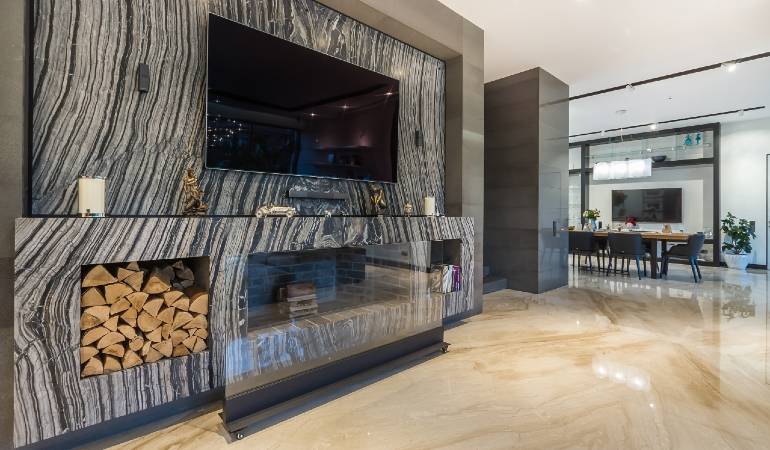
Most people think the hard part of mounting a TV over a fireplace is getting the bracket on the wall. It isn’t. The bracket is easy. The hard part is making sure the TV doesn’t overheat, your neck doesn’t ache after every film, and the whole thing doesn’t end up looking like a DIY afterthought.
The idea makes sense on paper. The wall above a fireplace is usually the biggest, most prominent wall in the room. The fireplace already draws the eye. Putting a TV up there feels natural, almost inevitable. But there are real decisions to make before you drill anything, and getting them wrong is expensive.
This post covers the honest pros and cons, how to do it safely based on your fireplace type, how to get the viewing angle right, and how to make the finished result look like it was always meant to be there.
Table of Contents
What Are the Real Pros and Cons of Mounting a TV Over a Fireplace?
The main advantages are space and visual focus. The main risks are heat damage and a viewing angle that’s too steep. Both are real, and both are worth understanding before you commit.
The biggest draw is space. In smaller living rooms, the wall above the fireplace is often the only sensible option for a TV. It keeps the floor clear, removes the need for a bulky TV unit, and creates one strong focal point rather than two competing ones. When it’s done well, the TV feels like part of the room rather than something squeezed in as an afterthought.
There’s also a practical logic to it. People naturally gather around the fireplace. If that’s where everyone sits, that’s where the screen should be.
But here’s where it gets honest. The viewing angle is often too high. A TV sitting above a mantel is usually well above eye level, which means you’re tilting your head back for the entire film. Do that for two hours and you’ll notice it the next morning. Do it every night and it becomes a real problem.
Heat is the other major concern. Fireplaces push warm air upward, and electronics don’t handle consistent heat well. Over time, it can shorten your TV’s lifespan. In a worst case, it causes immediate damage. Cable management is trickier too. Running cables down a chimney breast isn’t impossible, but it needs planning. Neither of these problems is a dealbreaker. Both need a proper answer before you start.
Check also:
How to Mount a TV on the Wall by Yourself
Is It Actually Safe to Mount a TV Above a Fireplace?
Yes, but only if you take heat seriously first. Most TVs are rated to operate up to around 40°C. A wood fire or gas fireplace running at full heat can push temperatures well above that in the space directly above the firebox. That’s where the damage happens.
The good news is there are straightforward ways to manage this. A heat shield fitted above the firebox redirects hot air forward rather than straight up toward the TV. Some fireplace surrounds are built with this in mind. Before you mount anything, measure the temperature at your planned TV position using a basic thermometer while the fire is running at its usual level. That one step tells you everything you need to know.
Structural concerns matter too. Chimney breasts are usually solid, but you still need to find the right fixing points. Hitting the mortar rather than the brick or missing a stud in a drywall surround creates an unstable mount. If there’s any doubt about the wall, a professional TV wall mounting service can assess the structure and fit the mount correctly before anything goes wrong.
The rule is simple: measure the heat first, add protection where it’s needed, and don’t assume it’ll be fine without checking.
Check also:
How to Make Your Home Safe from Fire
Choosing the Right Mount for Your Fireplace Type
Gas Fireplaces
Gas fireplaces vary a lot in heat output depending on the model and how often they run at full power. Clearance is the priority here. You want as much vertical distance as possible between the top of the firebox and the bottom of the TV. A full-motion or tilting mount is a strong choice because it lets you angle the screen slightly downward and pull it away from the wall when the fire is running, which helps with both the viewing angle and heat exposure at the same time.
Electric Fireplaces
Electric fireplaces are the easiest option to work with. They produce far less heat than gas or wood-burning alternatives, and the heat they do generate tends to come from front or side vents rather than rising directly upward. That said, don’t ignore heat management entirely. Make sure there’s proper ventilation and that the TV isn’t sitting directly above a top vent. A low-profile or tilting mount is usually sufficient here.
Wood-Burning Fireplaces
These need the most care. Wood fires burn hot and produce the sharpest rise in temperature above the firebox. If you’re mounting a TV above a wood-burning fireplace, a heat shield is not optional. You’ll also want a mount with significant clearance, ideally one that allows the TV to pull forward away from the wall when the fire is lit.
Beyond heat, there’s smoke. If your flue isn’t in good condition or the fire draws poorly, soot and smoke residue can build up on the screen and in the vents behind it. Keep the flue maintained, use properly seasoned wood to reduce smoke, and think carefully about whether you actually want the TV running at the same time as the fire. Running both together is where the risk really climbs. If you only use the fire occasionally and the TV separately, the risks are far more manageable.
How Do You Get the Viewing Angle Right?
The ideal TV height puts the centre of the screen at or just below your eye level when seated. For most people on a sofa, that’s roughly 100 to 110 centimetres from the floor. The problem with fireplace mounting is the TV almost always ends up higher than that, sometimes by 30 to 50 centimetres depending on the mantel height.
Check the angle before you commit to anything:
- Sit in your usual viewing spot.
- Measure your eye level height from the floor.
- Mark that point on the wall.
- Measure the centre height of the TV at your planned mounting position.
- Calculate the difference. Anything more than 15 degrees of upward tilt causes discomfort over longer viewing sessions.
If the angle is too steep, a full-motion mount that tilts downward makes a real difference. These mounts let you angle the screen toward your seating position, which brings the effective viewing angle much closer to comfortable. It won’t fix a TV that’s two metres off the ground, but for a moderate height increase, it solves most of the problem.
The angle check takes five minutes. Skip it and you might spend the next few years watching TV with your chin pointed at the ceiling.
What Design Details Actually Make It Look Good?
A TV above a fireplace either looks like it belongs there or looks like someone bolted a screen to a wall and left. The difference is almost always in the details around it, not the TV itself.
A well-proportioned mantel shelf is a good starting point. It creates a visual break between the fireplace and the screen so the two elements don’t blur into one another. You can dress the shelf without blocking the screen, and it frames the whole setup in a way that feels deliberate.
Ambient lighting does more work than most people expect. Warm LED strips behind the TV or around the fireplace surround reduce the harsh contrast between a bright screen and a dark wall. It’s easier on the eyes and looks genuinely good in the evening. It also draws the eye to the whole wall as a feature rather than just the screen floating above a fire.
For sound, a soundbar mounted just below the TV sits naturally in this space. The fireplace surround can hide in-wall speaker cables if you’re planning a more involved setup. It takes planning before the wall is finished, but the result feels built-in rather than patched together. Built-in shelving either side of the fireplace is another strong option. It adds storage, somewhere practical to put media devices, and frames the whole feature wall in a way that looks considered rather than accidental.
How Do You Handle Cable Management Properly?
Cables hanging loosely down a chimney breast are the thing that ruins an otherwise good-looking setup. Sorting this properly is one of those jobs where half an hour of effort upfront saves you looking at something irritating every single day.
The cleanest solution is in-wall cable routing. You cut a channel in the wall, run the cables through conduit, and patch the wall back up. On a chimney breast, this usually means routing down the side rather than through it, since drilling through a live flue isn’t an option. It’s more work, but the finish is genuinely tidy. No visible cables at all.
Cable management channels are the next best thing. These are paintable plastic channels that sit on the surface of the wall and conceal the cables inside. Painted to match the wall, they’re barely noticeable. Not invisible, but a significant improvement over loose cables dropping down the wall.
Pull-down mounts are worth considering here too. They let you lower the TV to a comfortable height for viewing and push it back up when you’re not watching. They also give you easy access to the ports at the back of the TV, which makes plugging in devices far less of a frustration.
Whatever approach you choose, plan the cable route before the TV goes up. Sorting it out afterwards is always harder, and often means taking the mount back off the wall entirely.
Check also:
How to Keep Your House Safe from Electrocution
Does the Type of Fireplace Change Where the TV Should Sit?
Yes, significantly. Your fireplace type affects the minimum safe clearance height, how far the TV needs to sit from the wall, and what protection you need between the two.
With an electric fireplace, placement is flexible. Lower heat output means you can position the TV closer without the same level of risk, and there’s no flue or smoke to factor in. The main thing to check is that the TV isn’t sitting directly above a heat vent.
Gas fireplaces vary more than people expect. An inset model with a glass front behaves differently to an open-fronted one. Check the manufacturer’s recommended clearance distances, measure the actual heat output at the proposed TV position, and factor in how often you run the fire on high settings. The answer changes depending on all three.
Wood-burning fireplaces need the most caution and the most clearance. The placement goal with any fireplace is the same: as high as it needs to be for safety, but as low as possible for comfort. Finding that balance is the whole challenge of this setup, and getting it right makes everything else easier.
Book our handyman service for a seamless install today.
Enter your postcode to view our rates and availability in your area.
For questions about the services we offer visit our main site
Takeaways
- Heat is the biggest risk. Measure the temperature at your proposed TV position while the fire is running before you mount anything, especially with gas or wood-burning fireplaces.
- Your fireplace type changes the rules. Electric is the most forgiving. Wood-burning needs the most clearance, the most protection, and the most thought.
- Check the viewing angle before you commit to a height. Anything more than 15 degrees of upward tilt becomes uncomfortable over longer viewing sessions.
- A full-motion or tilting mount solves two problems at once: it lets you angle the screen down and pull it away from heat when the fire is running.
- Good design is what separates a feature wall from a screen bolted above a fireplace. A mantel shelf, ambient lighting, and integrated shelving all make a real difference.
- Plan cable routing before the TV goes up. In-wall routing or cable channels both work, but neither is easy to retrofit once the mount is fixed.
Leave a Reply