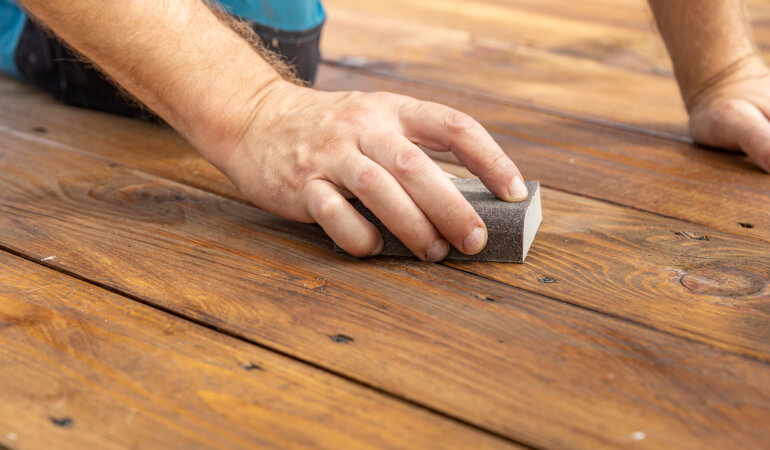
Wood floors are a beautiful addition to any home and are often recommended for those with busy family lives – which may come as a surprise for some given how much damage life, in general, can cause to our home, whether it’s kids, dogs or clumsy adults!
One of the greatest things about wood floors is that they can be sanded and refinished multiple times over the years instead of being replaced, which is helpful should any of this damage occur to them, or even if you just fancy a change.
We have teamed up with online flooring retailer Luxury Flooring & Furnishings to create a guide on sanding your floor, from start to finish. But first, let’s clear one thing…
Table of Contents
What exactly is floor sanding?
Floor sanding is a renovation process that involves removing the top layers of a wooden floor with abrasive tools and materials. The process includes three main stages – preparation, sanding, and varnishing. As a result, the wooden floor becomes smooth and shiny. You can sand a floor by hand, or you can use modern sanding equipment.
Every DIY-er can choose which method to use. Sanding by hand allows more control of the process, but it’s also a slow and tiring task. Using modern equipment is fast and easy, but professional machines aren’t cheap to buy or rent.
Check also:
How to Remove Scratches from Wood Furniture
How to sand a wooden floor yourself
If sanding is part of a full decoration effort, leave skirting board work and painting, etc., until the end so the dust does not ruin your efforts.
Preparations
Start by getting everything you need for the sanding process ready. Here is a list of all tools and materials:
- Goggles
- Dust mask;
- Ear defence;
- Sander (both a ‘drum’ and ‘edging’ sander if possible. If you are using both, double the amount of sandpaper);
- 12 sheets of 24 grit sandpaper;
- 8 sheets of 40 grit sandpaper;
- 8 sheets of 80 grit sandpaper;
- 5 sheets of 120 grit sandpaper;
- Varnish (any gloss level – but satin finish is recommended for contemporary looks, minimised glare and less visible imperfections);
- Brush for Varnish;
- A hammer for fixing loose nails;
- A hoover for fine dust. You might have to rent as well as most domestic hoovers aren’t fit for the job;
- Optional: Woodstain (if you wish to colour your floor);
- Optional: Additional floorboards in case your floor needs repairs.
Before you start, however, you need to clear the floor of any furniture, décor, curtains and other objects that are touching the floor or may interfere with the job. If possible, remove any doors in the room to avoid potential damage. If not, it will be fine to carefully work around them.
Next, ensure there will be no risk of damage to the sandpaper or sander by scanning the floor for any protruding nails, staples or screws. Remove staples and screws as necessary, and hammer any nails into the floor – around 2mm beneath the surface.
If you have rotten or heavily damaged floorboards, now is the time to replace them. No matter how much you sand and varnish those parts, they won’t look good after the procedure. So spend some time on repairs.
You have to also determine your sanding grit. A floor needs to be sanded several times, each with a finer sheet of sandpaper. The standard is to use 24 – 36 grit paper for the first one, and work your way up to 100 – 120 grit. However, each floor is different and yours might require a more personalised approach. If you don’t choose the right combination, the sanding procedure might leave unpleasant scratches. Consult with a professional if you want to be completely sure.
Once you are sure the floor is smooth, you should clean it by vacuuming, then wiping with a damp cloth and waiting for it to dry. If there are any gaps in the floor, it is recommended to fill them with papier mache.
Protection
There are two layers of protection, these are known as personal protection, and the protection of your home. Be careful not to overlook these to save time and effort, as health risks could be posed, and any damage will not be worth it.
- Start by closing/sealing windows, doors and vents, as dust can easily escape and damage furnishings in other rooms and even pollute the atmosphere. This can be dangerous if you have any children, pets, or there are tenants with breathing problems.
- Plug sockets and other nooks and crannies should be covered with masking tape or anything else that works, as again damage and danger may otherwise result.
- For your personal protection, open as many windows as possible to minimise dust pollution, and wear a dust mask, goggles and ear defense.
- During the job, ensure you watch your footing and do not trip over the wire from the sander.
The process of sanding your wooden floor
The most essential tip here is to sand with the grain, not against it. If there is any one thing to remember about sanding floors, this is it; otherwise, the finished job will look unprofessional with unsightly scratches.
Get the drum sander ready
If possible, use an edging sander for the edges of the room, and a large drum sander for the remainder of the floor. You can ask the clerk at the rental store how to use it. Make sure the drum sander’s rear wheel is tight and that the drum stands flat on the floor.
Add the appropriate starter grit sandpaper and test the drum sander on a hidden floor area, for example in the closet, to make sure it’s working properly. If it creates a dust cloud, you have to stop and check if the dust bag is properly attached. This is a job worth completing well, so it is recommended that you do this before beginning.
Sand the floor
Start by using 24 grit, then 40, then 80, then 120 grit sandpaper. This is for one of the sanders, so if you are using both, you will get through twice this amount. Start by moving at a 7 to 15-degree angle to the direction of the floorboards. Don’t stop in one spot while the sander is on, as it will leave an imprint.
Sand the whole area at the same angle. This should level out uneven parts of the floor. When you get to the wall, move the sander back to your starting point. Turn around and sand the other side of the room, while moving along the same angle. Leave the edges unsanded.
Use the less course paper (24 grit) as a starting point to ensure old layers are removed, and gradually moving up helps finish the job without ruining the floor by over-sanding that causes excessive roughness. Do not be tempted to skip the finer paper as this sacrifices professionalism and ease of maintenance. Ensure, however, that you do unplug the sander before changing paper for personal safety purposes.
The first sanding should remove the old floor finish and make most scratches visible. Every time you load a higher number of sandpaper, you should start sanding from the opposite wall. Sand along the grain, directly along the boards. By the end, all scratches from the floor should be removed.
Need help sanding your floors?
Enter your postcode to view our rates and availability in your area.
For questions about the services we offer visit our main site
Hoover the dust
Once the first sanding stage is done, take a break for half an hour and allow the dust to settle. Then, come back with the hoover and clean it up. You should do this after each sanding process.
Use an edge sander on the edges
Just like with the large drum sander, load the edge sander with the low grit sandpaper and work your way to the higher numbers. For the first pass, sand in a clockwise zigzag pattern. On the second pass, make sure the edge matches the rest of the floor. Using the 100 -120 grit sandpaper on an edge sander is risky and usually NOT RECOMMENDED if you are an amateur, as you might end up burning the floor and paper. Finally, clean up the area.
Tip: If you’ve decided to sand by hand, you would have to go through all these steps without the specialised equipment. You could get the same results, however, it would be a way more tiring process and it would take a lot more time.
Check also:
How to Add Wood Panelling to Walls
Varnishing
Congratulations, you have sanded your floor! But that’s not the end. To ensure longevity and a hard, durable finish, you will need to varnish the floor.
To start, make sure there is no dust left behind from sanding so the floor is varnished smoothly. There is also the matter of choosing the varnish. If you’re an amateur, it’s recommended that you use a water-based varnish instead of the oil-based or solvent-based ones. The water-based varnish is easier to use, smells less and dries the quickest. It should take about 24 hours for it to dry.
Any gloss level is also fine, but we recommend one with a satin finish to ensure shine and glare reduction and a better appearance through lack of visible imperfections. You should varnish as soon as possible after sanding the floor, as it is otherwise unprotected.
Never shake the container of the varnish, as it will fill it with air bubbles and they’ll stick around when you apply it. Also, read any instructions before purchasing to ensure this fits your timescale and needs. Apply a very thin coat with a fine brush or foam pad in the same direction as the wood grain. Don’t apply too much at once, otherwise, the grain will rise.
It takes two hours for the first coat to dry. You’ll need two coats if you’ve applied a primer beforehand. If you didn’t, you’ll need three coats. When applying the varnish, do it in the direction of the grain for best results. If you wish to colour your floor, however, before varnishing, you would need to apply a stain first and wait for it to dry. Be aware that this could take around 6-8 hours, with some brands asking you to wait for 24.
After 48 hours or when the varnish has cured, return your furniture to the room.
Check also:
Aftercare
Once you have sanded and varnished a floor, it is a shame to let the hard work be wasted. For maximum longevity, regularly vacuum and wipe your floor with a damp cloth. This is the only maintenance really needed and will ensure you can enjoy your beautiful new floor for a very long time.
If you are unsure about how to sand your floor or are not confident about doing the job, then always consult a professional. This will save you time, ensure that the job is done properly, and make sure your floor retains its beautiful look and quality.
How long does it take to sand a floor?
The duration can vary depending on the square feet of the working area, the general state of the floor, and the sanding method you choose.
If we assume you have to sand the floor in a single standard room, that doesn’t require any serious repairs during preparation and you’ve decided to sand by hand, it should typically take up about 6 or 7 hours. As a quick comparison, for a professional sander who would use specialised equipment, it should take no more than 2 or 3 hours.
Need help sanding your floors?
Enter your postcode to view our rates and availability in your area.
For questions about the services we offer visit our main site
Takeaways
- Make sure to repair damaged floorboards and hammer in any protruding nails before string the sanding process;
- Choosing the right grit of sandpaper could make or break your floor, so if you’re not sure what grit your floor needs, seek a professional’s opinion;
- Sanding by hand is cheap but tiring and time-consuming. Sanding with rented specialized equipment is easier and faster but more expensive;
- It’s recommended to use a water-based varnish after sanding.
For solid wood, engineered, parquet, laminate or vinyl flooring, please visit Luxury Flooring and Furnishings.






Hiya – i have hired a drum sander but its only Removing about an inch rather than the entire width of the paper do you know why this is?? My floor is even and its been varnished before. Im tempted to take the equipment back!
Very helpful instructions to get the sanding done for the flooring. Thank you for sharing.
This is very creative and resourceful!
Great post. Thank for sharing this guide!