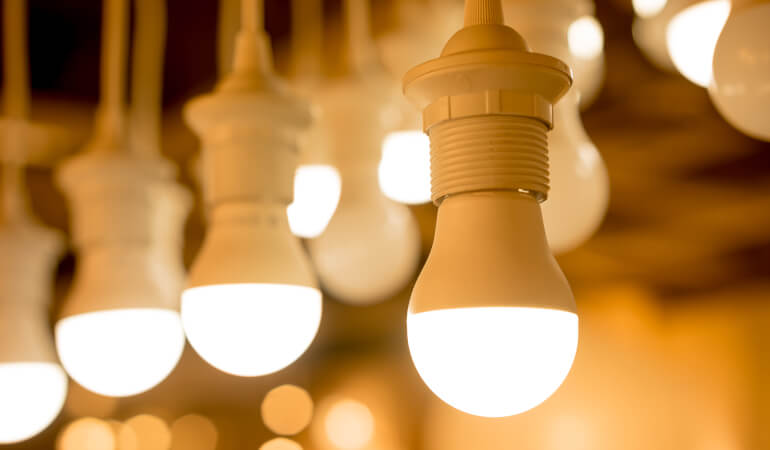
LED lighting and dimmer switches show up in more homes each year and for good reason. They cut energy use and give more control over how a room feels. You can really set the mood when you dim the lights a bit.
Herein lies the question, though. Can you dim LED lights, like, is that how they are by default? The answer is not as simple as yes or no. While modern LEDs are great in their own way, dimming them works very differently compared to old-style bulbs.
In this guide, you will learn how LED dimming actually works and which lights can be dimmed.
Now, let’s shed some light on the situation…
Table of Contents
A few words on LED and dimming lights
If you have never looked into how they work, then now you will learn.
LED lights specifics
LED lights get their name from light-emitting diode. They don’t use heat like traditional bulbs or tubes. A small chip turns electricity into light. This is the key difference that sets LEDs apart from the other ones.
There’s also the aspect that with older lighting, a lot of energy is wasted. Incandescent bulbs lose most of their power as heat, which is why they get hot so quickly. Fluorescent bulbs perform better, but they still use more electricity than needed and contain small amounts of mercury. LED lights are the opposite of all that.
They use far less energy to produce the same level of brightness and stay cool to the touch. They also last far longer than older bulbs. Between 10 and 20 years with normal use, which is incredible. Inevitably, this will cut your energy bills over time too
In the UK, with energy costs rising, many households find that LED lights are worthy replacement for the old bulbs. At the same time, there is a growing interest in greener homes. LEDs fit naturally into that shift.
How do dimming lights work?
Dimming lights means you use a switch that lowers their brightness. It doesn’t turn them off fully, and that’s the point.
So how does a dimmer switch work? It controls how much electricity reaches the bulb. This, in turn, changes how bright the light appears. Newer systems even use digital controls to adjust brightness through software. Dimming LED lights saves electricity, too. When dimmed, lights use less power.
Another benefit is longer bulb life. But how does dimming LED lights make them last longer? Less power places less strain on the internal parts of the bulb. This can extend its lifespan.
That said, LEDs don’t dim like old incandescent lamps do. Basic switches make traditional lamps dim smoothly. LEDs need electronic parts and dimmers that work with them. If you utilise the wrong kind, it can cause buzzing, flashing, or control that isn’t even.
Check also:
How to Install a Dimmer Switch
Can you dim any LED lights?
No. While many modern LEDs support dimming, some are designed to work at full brightness only. If you try to dim the wrong type, it can cause flickering, buzzing, or just remain at maximum brightness.
Standard LED bulbs look the same as dimmable ones, but they work differently inside. Dimmable bulbs have built-in electronics to adjust light output smoothly. Non-dimmable bulbs don’t. That’s why some aren’t dimmable.
Ok, so what affects whether LED lights can be dimmed?
- Type of LED bulb. Some LED bulbs are marked as dimmable. Others are not. This is true for all types of lighting, even ornamental bulbs and spotlights. A lot of people want to know if LED strip lights, LED flood lights, or LED string lights can be dimmed. It depends on the item. Most of the time, LED strip lights need a driver or controller that can be dimmed. To work with a dimmer switch, flood and string lights must say that they can be dimmed.
- Dimmer switch compatibility. The switch must be suitable for LEDs. Older dimmers made for incandescent bulbs may not work properly. In most cases, you do need a special dimmer switch for LEDs. The easiest way to check compatibility is to check the packaging.
- Quality of the LED driver. Every LED bulb contains a driver that controls the power supply. A good-quality driver handles changes in voltage smoothly. This helps the light dim evenly. Poor drivers struggle at lower power levels. Then you get flickering or uneven brightness, even with bulbs labelled as dimmable.
How do I know if my LED lights are dimmable?
Check the packaging or product description. Look for the symbol for a dimmable bulb. It usually appears as a small light icon with curved lines or a dimmer dial symbol next to it. You may also see the word “dimmable” on the box or the bulb itself. If there is no symbol or mention of dimming, the LED is most likely non-dimmable.
How to dim the LED lights in your home
Dimming only works well if every part of the setup is right.
Make sure you have dimmable LED lights
First, check the bulbs. Once again, only LEDs marked as dimmable can work with a dimmer switch.
Pair the lights with a compatible dimmer switch
Forget traditional dimmer switches. They are designed for incandescent bulbs and do not suit LEDs. When you’re searching for a dimmer switch, check that it is clearly labelled for LED use. It also needs to match the total wattage of your lights. There are a few common dimmer types suitable for LED lighting:
- Trailing-edge dimmers – Popular for LEDs because they offer smoother dimming and less noise.
- Universal dimmers – They adjust automatically to different loads and work with many LED setups.
- Smart dimmers – These connect to apps or smart home systems and even can be scheduled.
And what if you want to replace non-dimmable LEDs with dimmable ones? Fortunately, in many cases, you can replace the bulbs yourself, as long as the fitting stays the same. Just purchase dimmable LED bulbs, then pair them with an LED-compatible dimmer switch.
Low-voltage or built-in LED systems can be complex. They may need a separate, dimmable driver. Better seek a professional electrician’s advice in this case.
Check also:
How to Keep Your House Safe From Electrocution
Pay attention to the wattage
Even though LEDs use less power, wattage is still important. There are minimum and maximum load limits on dimmer switches. The dimmer might not work right if the total wattage of your LEDs is less than the minimum.
Example. You need to connect five 2-W LED bulbs to your dimmer if it needs at least 10 W to work. The five bulbs together make 10 watts of power. But if you only connect two 2 W bulbs, which make 4 W, the dimmer might have trouble.
Get the installation right
Poor wiring or incompatible parts can lead to flickering, buzzing, or overheating. Damage to the lighting circuit is also very possible. Unless you are a licensed electrician yourself, it’s best to call one. A professional knows how to match the bulbs, driver, and dimmer, install them safely, and test the system. It adds a cost upfront, sure, but it saves time and prevents faults.
There is also another reason. According to Part P Building regulations, you can do some simple electrical tasks yourself. However, more serious ones, you must leave to a licensed professional.
You’ve already bought the components? Cool. Schedule an installation with electrician today.
Enter your postcode to view our rates and availability in your area.
For questions about the services we offer visit our main site
Flickering dimmable LED lights and other common issues
Now let’s talk about some common issues with dimmable LED lights, because you’re bound to stumble upon some.
The first one is on why dimmable LED lights flicker and buzz. A dimmer switch that doesn’t work with your lights, a low-quality LED bulb, or wiring that isn’t right are the most common causes of this. You need to be sure that your dimmer can be used with LEDs in order to remedy this. Next, make sure that the overall wattage of your LEDs is within the range that the dimmer says it should be. Finally, get rid of any bad bulbs and replace them with good, dimmable LEDs.
When LEDs don’t dim evenly, you get uneven brightness or unexpected increases in light levels. This is another prevalent problem. This happens a lot when you use bulbs that can’t be dimmed or when the dimmer and bulbs don’t work together properly. Choosing high-quality dimmable LEDs is the best approach to avoid this problem. Then connect them to the right dimmer that works with LEDs.
Over-dimming can also cause problems. Some LEDs are designed to work only within a specific brightness range. When they’re above or below their threshold, they can flicker or have unexpected shutdowns. Always follow the manufacturer’s instructions and avoid exceeding the recommended dimming limits.
Can you paint LED lights to dim them?
Don’t paint LED lights. The paint can trap heat, damaging the electronics. LEDs are heat-sensitive, so any coating that blocks airflow causes problems.
What can I put over an LED light to dim it?
If you want to dim LED lights without a dimmer, there are a few safe alternatives that act as light filters. For example:
- Parchment paper – You can tape a layer over the light or the lampshade. It diffuses the light and softens brightness, similar to a lampshade.
- Neutral density (ND) film – This is a thin, tinted plastic used in photography. It reduces light intensity without changing the colour. You can buy ND film, cut it to the right size, and apply it over the bulb or fixture.
- Diffuser sheets – These are made for lighting setups and scatter light evenly. They work well on panel lights or under cabinet LEDs to reduce glare.
These methods help with overly bright lights, but aren’t as smooth as dimmer switches. They’re a practical choice for quick fixes or avoiding fixture changes.
Check also:
How to Install Landscape Path Lighting
Takeaways
- LED lights last a lot longer and cost less to run.
- You should always check the box because not all LED lights can be muted.
- In addition to the lights, you need a dimmer switch.
- Always make sure that the wattage of your LED bulbs is within the limits of the dimmer.
- Do not ever paint over LED lights.





Leave a Reply